Koala Rescue 24/7 (02) 6622 1233
Report a Sighting
Office (02) 6621 4664
Donate

Trauma Season

Keep koalas safe.

Koala Trauma Season

Trauma Season

Keep koalas safe.

How You Can Help Keep Koalas Safe

Spring and summer are particularly busy times for koalas across the Northern Rivers. As koalas become more active and move through the landscape in search of food, territory and mates, they’re more likely to cross roads, enter backyards and encounter people and domestic animals.

For the team at Friends of the Koala, this also means an increase in calls about koalas impacted by vehicle strikes, dog attacks and other injuries.

The good news is that there are simple things we can all do to help keep koalas safer during trauma season.

Be extra vigilant on the roads

Koalas can be difficult to spot, particularly around dawn, dusk and at night, when visibility is lower and koalas may be more active.

When travelling through known koala habitat, typically identified with a road sign and reduced speed limit, stay alert and keep an eye out for wildlife on or near the road. Be particularly aware in areas where koala activity or crossings have been reported.

If you see a koala on or near the road, give it plenty of space, allow it to move safely away from traffic where possible, and always report the sighting to Friends of the Koala – even if the koala appears healthy.

koala warning road sign

Keep dogs and other domestic animals safely contained

Dog attacks can cause serious and sometimes fatal injuries to koalas, particularly when koalas move through backyards and residential areas.

Keeping dogs securely contained, especially at night, can help reduce the risk. If you spot a koala in your yard, bring your dog inside or keep them securely separated until the koala has safely moved on.

Other domestic animals can also cause stress or pose a risk to wildlife, so keeping pets and other animals away from a koala is important.

Never allow a dog or other domestic animal to approach or investigate a koala, even if they are normally calm around wildlife.

Give koalas space

Seeing a koala up close can be exciting, but if you come across one on the ground, avoid approaching, touching or crowding it.

Keep children and pets at a safe distance and give the koala a clear path to move away. A koala on the ground isn't necessarily in trouble, but if you notice signs of injury, illness or unusual behaviour, contact Friends of the Koala for advice.

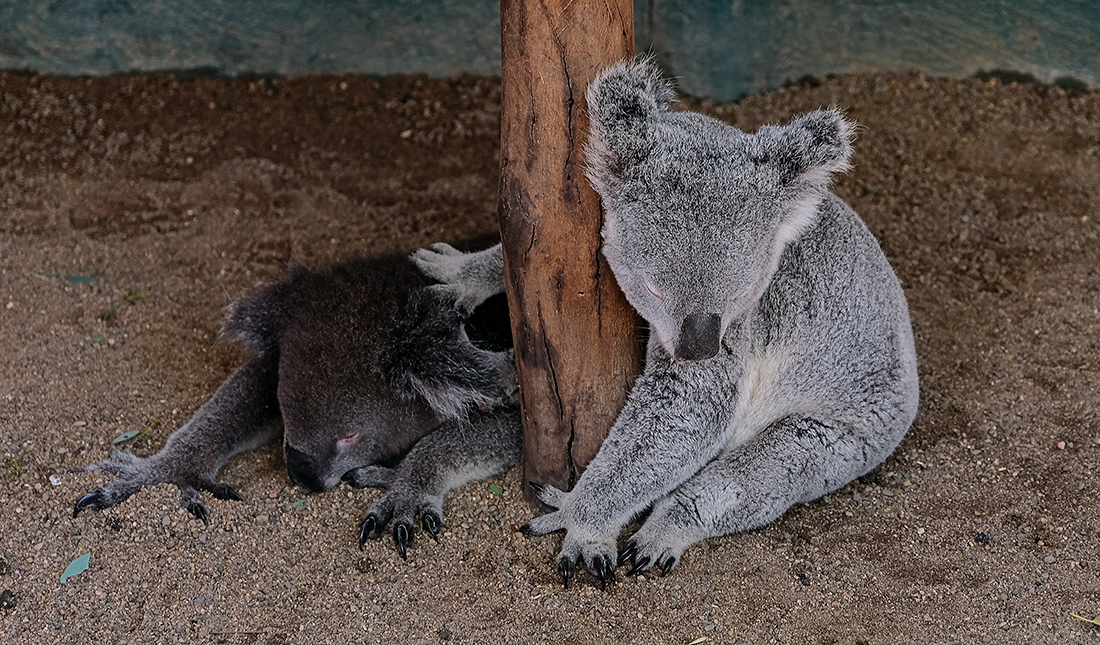
Koalas on the floor
Sustainable actions for wildlife

Report all koala sightings

If you see a koala, please report the sighting to Friends of the Koala – even if the koala appears healthy or you think someone else may have already reported it.

It’s always better to receive multiple reports than none at all. Reporting sightings helps Friends of the Koala keep track of local koala activity and, importantly, helps ensure a koala needing assistance doesn’t go unnoticed.

Don’t assume someone else has already reported the koala – your report could be the one that makes the difference.

Know when a koala may need urgent help

Contact Friends of the Koala if a koala:

  • Has been hit by a vehicle or attacked by an animal
  • Has visible injuries or bleeding
  • Appears weak, distressed or unusually still
  • Remains on the ground for an extended period
  • Is in immediate danger from traffic, domestic animals or other hazards

Providing an accurate location and, where it is safe to do so, keeping the koala in sight can help the rescue team respond.

A little awareness can make a big difference

Friends of the Koala’s rescue and veterinary teams are there when koalas need help, but protecting koalas during trauma season is something the whole community can play a part in.

Being vigilant for wildlife on or near our roads, keeping dogs and other domestic animals safely contained, giving koalas space and reporting every koala sighting are simple actions that can make a real difference.

See a koala? Report it.

If you think it needs help, call Friends of the Koala’s 24/7 Rescue Hotline on 02 6622 1233.